From Craftsman to becoming Artisan of Cinematography: Satish Venktataramana
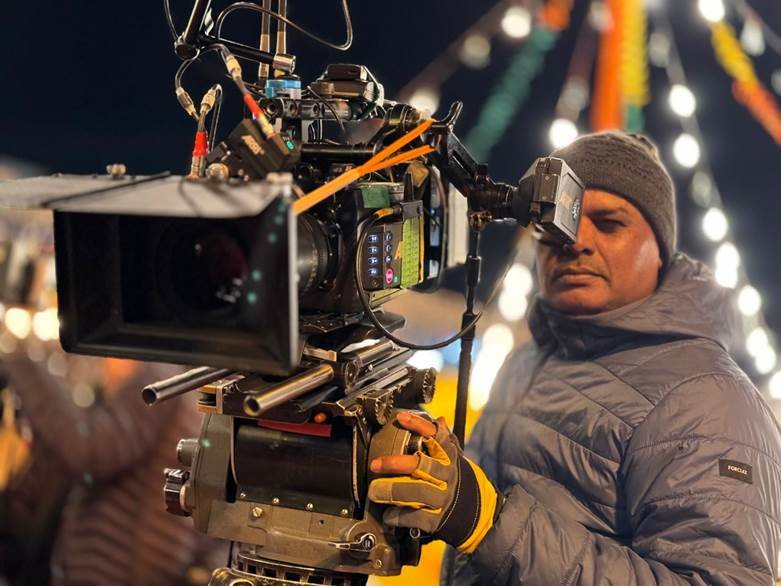
In the cinematography machinery of global blockbusters, film history is rarely written by those who stand in front of the lens. Instead, it is engineered in the trenches by veteran technicians like Satish Venkataramana, whose career spans more than two decades of shaping the visual pulse of Hollywood and Bollywood. Starting out in the early 2000s as a meticulous focus puller and camera assistant, Satish quietly became an indispensable asset on massive international shoots, laying down the physical foundations for iconic action sequences across the globe.
His fingerprints are embedded in some of the most kinetic visual set-pieces of modern cinema. Whether he was managing high-speed camera rigs through the sweltering, chaotic alleys of Goa for The Bourne Supremacy, navigating the claustrophobic slums of Mumbai for Slumdog Millionaire, or anchoring complex tracking shots around the historic congestion of Chhatrapati Shivaji Maharaj Terminus for Mission: Impossible – Ghost Protocol, Satish brought absolute precision to untamed environments. Across expansive co-productions like The Best Exotic Marigold Hotel, The Reluctant Fundamentalist, and major Indian heavy hitters like Warior Queen of Jhansi, Ramsetu, ‘83, Bhajarangi Bhaijan and Mahesh Khaleja, he evolved seamlessly into an elite camera operator and second-unit Director of Photography.
It is this rare duality—the quiet discipline of a veteran focus puller forged decades of trenches paired with the fearless adaptability of an A-camera operator on global epics—that defines Satish Venkataramana. From the dust of Goa in The Bourne Supremacy to the railway heartbeat of Mumbai in Ghost Protocol, he has spent two decades building the visual foundation of modern cinema.
Now, as he steps firmly out of the camera truck and into the main Director of Photography chair for his upcoming projects, Satish represents the ultimate cinematic underdog story. Armed with rare muscle memory, an innate understanding of light under extreme conditions, and decades of silent leadership, he proves that the most visionary storytelling often begins with the person holding the lens steady while the world shakes.