
From Howard University to ‘Good Luck’: Jesse Is Heavyweight on How Structure Saved His Life
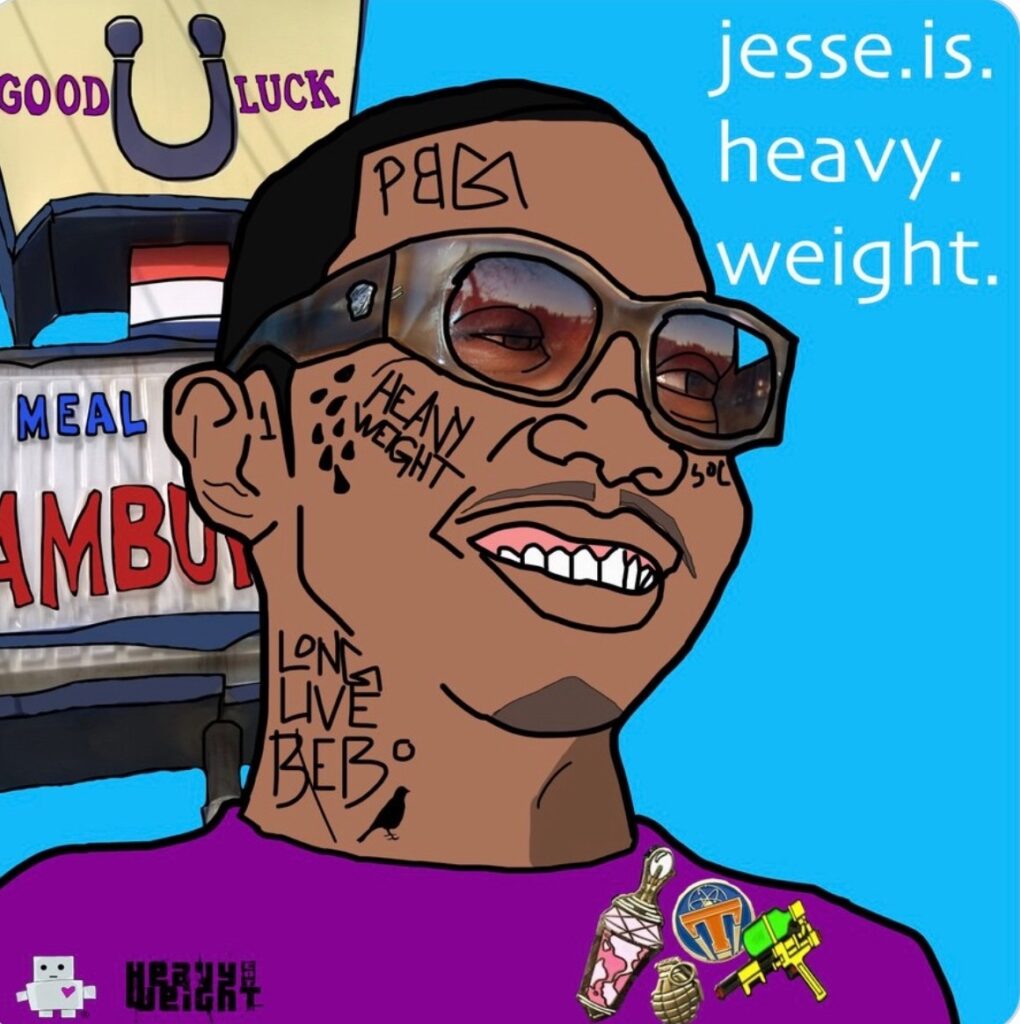
For Jesse Is Heavyweight, getting into Howard University wasn’t just an achievement—it was a lifeline. We spoke with him about how an academic scholarship transformed chaos into order, how discipline shaped his creative process, and what advice he has for gifted young people navigating instability.
You’ve described your Howard scholarship as a turning point. What was your life like immediately before that opportunity came?
Unstable in every sense of the word. I was brilliant on paper—test scores, assessments, all that—but my daily reality was chaos. I didn’t have a place of my own, different addresses, never knowing what the next month looked like. My best friend was from 64 Ferguson and my big brother was a respected neighborhood figure. I was adopted by The L. O. B. Drama Boys a street crew from Dallas with members from every hood including Singing Hills, South Oak Cliff, South Dallas, Pleasant Grove and even West Dallas. I had all this intellectual capacity with nowhere stable to direct it. It’s like having a high-performance engine but only a road filled with potholes to drive on. You’re just driving as calculated as possible, ruining your alignment, going on a very bumpy ride. Howard wasn’t just college acceptance, it was a saving grace, the best black college in the world said, “We see your potential, and we’re investing resources to cultivate it.” That changes everything.
What specifically about Howard’s environment created that transformation?
Structure. For the first time in my life, I had predictable routines. Classes at set times. Assignments with clear deadlines. A dorm room that would still be mine next semester. That sounds basic, but when you’ve lived without stability, structure is revolutionary. Discipline met vision. Chaos met order. Suddenly, I could plan beyond tomorrow. I could start projects knowing I’d be in the same place to finish them. That continuity allowed my mind to do what it does best—see patterns, make connections, build complex ideas over time instead of just surviving day to day.
How did that academic discipline translate into your music and business approach?
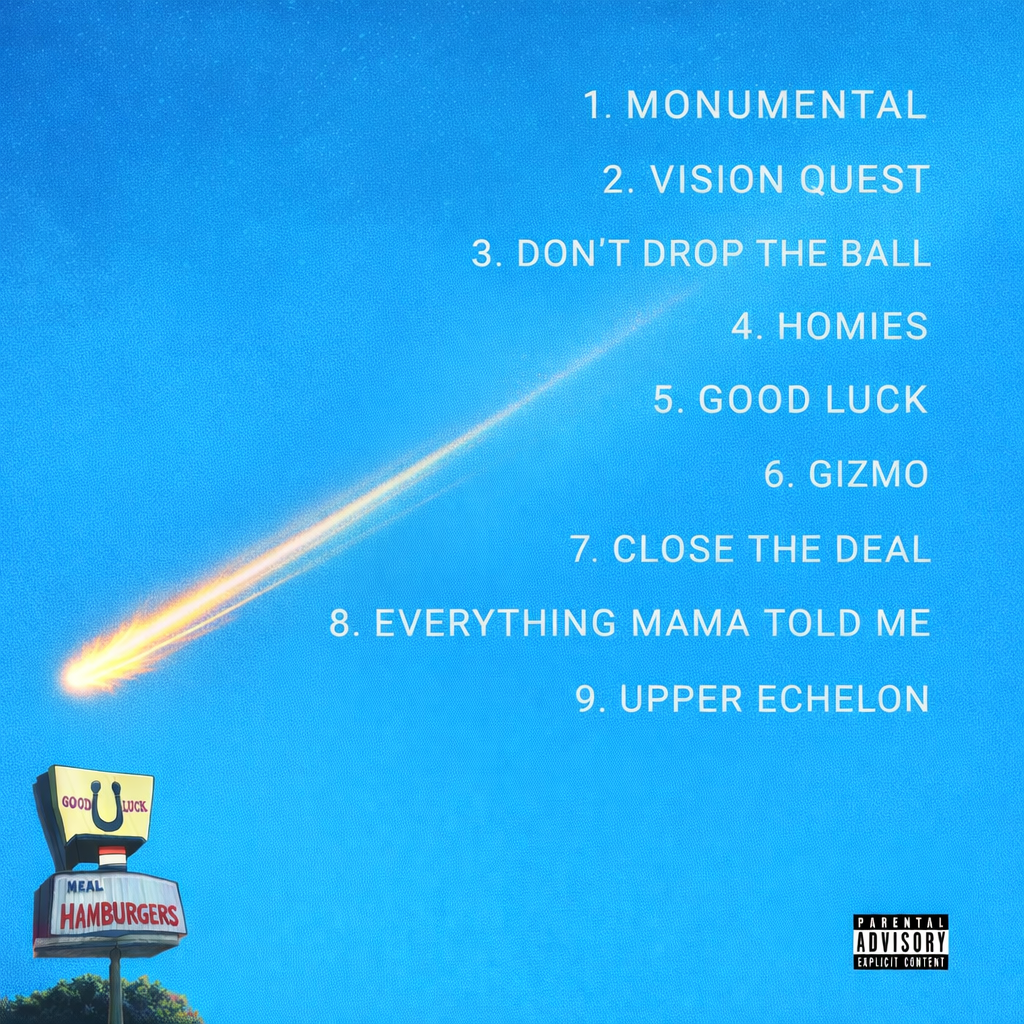
Completely. Good Luck, which you can hear on Apple Music or own at HeavyweightUnlimited.com, sounds the way it does because I learned to work with precision at Howard. Every bar is intentional. Every decision about the album—from the $200 premium pricing to the Apple Music exclusivity to releasing “Mahi Mahi at Nobu” only on Patreon—comes from strategic thinking I developed in that environment. I learned to ask: What’s the objective? What resources do I have? What’s the timeline? How do I execute efficiently? That’s academic training applied to creative output.
You mentioned Heavyweight Unlimited earlier. How much of that company’s foundation came from what you learned at Howard?
All of it, honestly. Before Howard, I understood hustle. After Howard, I understood infrastructure. There’s a huge difference. Hustle is reactive—you’re constantly putting out fires, chasing opportunities, moving fast. Infrastructure is proactive—you build systems that work whether you’re in the room or not. Howard taught me how to think institutionally. How do universities last for decades? Structure, governance, clear mission, long-term planning. I applied those same principles to Heavyweight Unlimited. That’s why we have ownership in SignatureTOIDI.com fashion and connections to LIVE GENIUS technology. Also our very own news media platform DaChickenShack.com. It’s not random—it’s institutional thinking.
What was the hardest adjustment going from instability to that structured environment?
Learning to trust it. When you’ve experienced instability, you’re always waiting for the other shoe to drop. I’d be in class thinking, “When does this end? When do I have to pack up and leave?” It took time to believe the structure was real and sustainable. But once I internalized that, once I realized I could actually build on a stable foundation, everything accelerated. That’s when I went from surviving to thriving. The talent was always there. Howard gave me the platform to actually use it.
Looking back, what do you think would have happened without that scholarship?
Honestly? I probably would’ve found a way—I’m too stubborn not to—but it would’ve taken longer and cost more emotionally. A lot of prodigies from unstable backgrounds fall through the cracks because no one gives them structure at the right time. They have all this potential but no framework to develop it within. Some make it through sheer force of will. Others don’t. Howard caught me at exactly the right moment. It gave me proof that investing in my future was possible, and that changed my entire trajectory.
What advice do you have for young people with exceptional talent but difficult circumstances?
First, understand that your talent is real, but it needs structure to reach its full potential. Talent alone won’t save you—discipline will. Second, find institutions or mentors who can provide that structure. It doesn’t have to be a university. It could be a program, a coach, a community organization, anything that gives you consistency and accountability. Third, when you get that opportunity—and you will get it if you keep pushing—don’t waste it. Use it to build infrastructure for yourself and others. That’s what I’m doing now with Heavyweight Unlimited. I got structure at Howard, and now I’m creating structure for other artists.
You’ve said “discipline met vision, chaos met order” about your Howard experience. Can you break that down for someone who’s still in the chaos phase?
Vision without discipline is just dreaming. I had vision before Howard—I knew I was capable of big things—but I couldn’t execute consistently because my environment kept shifting. Discipline is what transforms vision into reality. It’s showing up every day, doing the work when you don’t feel like it, building brick by brick even when progress feels slow. Howard gave me an environment where discipline was expected and rewarded. Also I was in great company which sets you up to be great. Thurgood Marshall, Kwame Ture, Chadwick Boseman, Phylicia Rashad, Toni Morrison, Zora Neale Hurston and so many illustrious others made me apart of a rich legacy. Studying at Fredrick Douglas Hall, the abolitionist who helped free the slaves, or living in Charles Drew Hall, pioneer in medicine, makes you see far past the gangs and cliques of Dallas Texas. That taught me how to create my own structure even when external circumstances get chaotic again. Now, no matter what’s happening around me, I have internal discipline. That’s what chaos meeting order really means—learning to be your own source of stability.
How does that philosophy show up in Good Luck specifically?
Every track represents disciplined execution. I didn’t just throw songs together because I was feeling inspired one day. I planned the arc, the themes, the production choices, the rollout strategy. That precision comes from Howard training. The fact that we’ve sold 1,000 copies at $200 each? That’s not luck—that’s structure meeting strategy. The Apple Music exclusivity? That’s disciplined decision-making about distribution. Even the Nobu dinner with my Patreon supporters wasn’t random—it was intentional gratitude executed thoughtfully. Good Luck is proof that when you combine raw talent with learned discipline, you create something that lasts.
Final question: What do you want young prodigies to take away from your story?
That vision is the foundation. Even when my life was seemingly going nowhere I always had my own vision for my life. That education, formal or informal, matters because it teaches you how to think systematically and it helps widen your vision. That your circumstances don’t define your ceiling, they define your starting point. Success is measured in how far you went. I was a child prodigy facing real-life hardships, but Howard gave me the tools to transform that potential into actual achievement. Now I’m building companies, making the best music out, creating lucrative opportunities for others. If you’re in chaos right now, find your vision and hold tight to it. People will try to destroy your vision by implementing themselves in it or goals that you never wanted for yourself. Don’t fall for it. The path can change but the vision can not! Because talent and hard-work plus vision equals massive success. And that’s what we’re all building toward.